

2026 Top Palletizing Machine Types for Global Buyers

Palletizing Machine selection will become more strategic as manufacturers balance labor shortages, product variety, and delivery pressure in 2026. The International Federation of Robotics reported 541,302 industrial robots installed worldwide in 2023, with more than 4.28 million operating globally. These figures show a mature automation market, not a passing trend. However, palletizing requirements differ sharply between a beverage plant, a chemical-free food warehouse, and a small e-commerce facility.

This guide examines the leading Palletizing Machine types expected to attract global buyers, including robotic, conventional, collaborative, layer, and hybrid systems. Each type offers a different balance of speed, footprint, payload, flexibility, and integration difficulty. PMMI industry research continues to identify labor availability, packaging variation, and operational efficiency as major automation drivers. Interact Analysis also tracks sustained investment in industrial robotics and warehouse automation, supporting the need for clearer equipment comparisons.

Speed is not everything.

A fast machine can still create costly bottlenecks. For example, a 25-kilogram bag line may need a high-payload robotic arm, while mixed cartons may require vision guidance and frequent recipe changes. Buyers should examine cycle rates, pallet patterns, safety design, maintenance access, software compatibility, and local service capability. These details often matter more than impressive brochure figures.

No single ranking fits every factory. That assumption deserves testing. Actual performance depends on carton stability, floor space, operator training, and upstream consistency. The following overview uses established industry data, practical purchasing considerations, and realistic 2026 expectations to help decision-makers compare palletizing technologies with greater confidence.
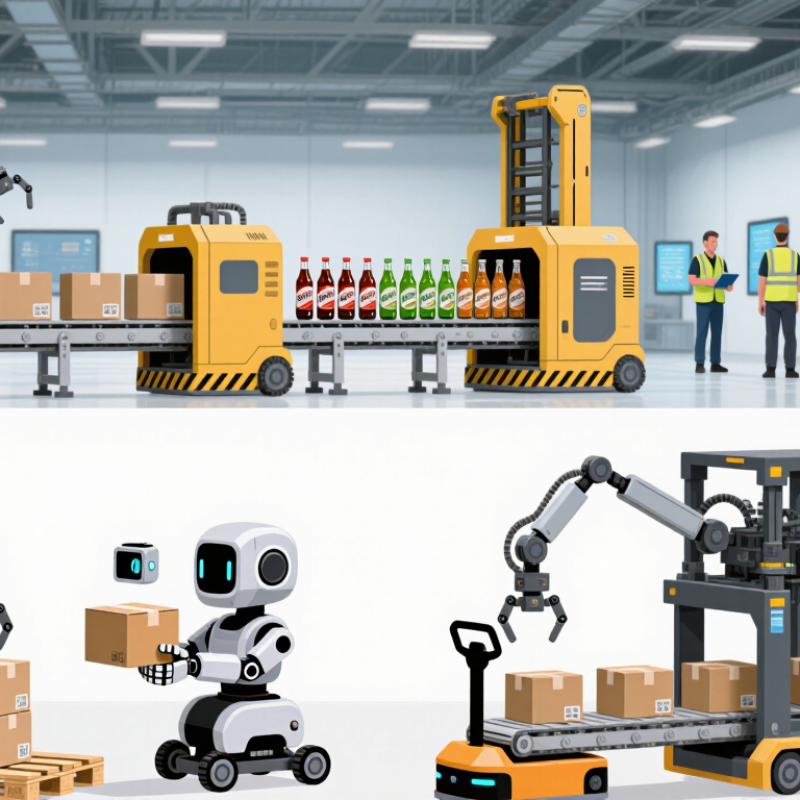
2026 Top Palletizing Machine Types for Global Buyers

Palletizing Machines: Definition, Role, and Core Operating Principles

Palletizing machines are automated systems that arrange cartons, bags, cases, or containers onto pallets. They create stable loads for storage and transport. Common types include robotic, conventional layer, and collaborative palletizers. Each type suits different speeds, weights, and floor plans.

Their core operating principle is controlled material handling. A conveyor delivers products to a positioning area. Sensors verify size, spacing, and orientation. A programmable logic controller then releases the selected pallet pattern. A robotic arm may use vacuum cups or mechanical forks. Layer palletizers build complete rows, while robotic units place individual cases with greater flexibility. The machine also checks pallet position and transfer height. Small errors matter.

The International Federation of Robotics reported 541,302 industrial robots installed worldwide in 2023. This figure reflects broader automation growth, not palletizing alone. PMMI industry research also identifies labor availability and production flexibility as major packaging automation drivers. In practical installations, operators still need to adjust gripper pressure, conveyor timing, and product recipes. Dust, crushed cartons, and uneven pallets can reduce reliability. No layout is perfect. Buyers should test real products before selecting equipment, because catalog speed rarely matches every factory condition.

Robotic Palletizers for Flexible, Multi-Product Warehouse Operations

Robotic Palletizers for Flexible, Multi-Product Warehouse Operations

Robotic palletizers suit warehouses handling mixed cartons, changing order profiles, and frequent product launches. A vision system identifies carton size, orientation, and label position before placement. The robot then selects a stable layer pattern for each pallet.

The International Federation of Robotics reported 541,302 industrial robot installations worldwide in 2023. This scale reflects expanding automation expertise across manufacturing and logistics. The 2024 MHI Annual Industry Report found that 55% of supply-chain leaders expected robotics and automation use to increase within five years.

Mixed loads expose weaknesses. Successful systems need tool-free gripper changes, accurate product data, and software that manages uneven cases. In practical installations, operators often test several stacking patterns before choosing the safest one. A six-axis robot may handle varied cartons well, but speed depends on case spacing, pallet exchange, and conveyor timing.

Safety remains central. Risk assessments, guarded zones, emergency stops, and operator training should follow applicable standards. Human workers still inspect damaged cartons and resolve unusual orders. That matters.

A common mistake is assuming every warehouse needs maximum speed. For many operations, reliable changeovers and low product damage create greater value than peak cycles per minute. Results should be measured through throughput, pallet stability, downtime, and manual intervention. The numbers may challenge the original design. That is useful.

2026 Top Palletizing Machine Types for Global Buyers

Typical rated throughput by palletizing machine type, measured in cases per hour. Actual performance varies with product size, pallet pattern, pallet height, changeover frequency, and safety requirements.

Layer palletizers generally deliver the highest throughput for stable, repetitive production. Robotic and cobot palletizers provide greater flexibility for warehouses handling multiple products, case formats, and pallet patterns.

Conventional Palletizers for High-Speed, Consistent Production Lines

Conventional palletizers remain practical for high-speed production lines handling stable case sizes. Their layer-forming design creates square, repeatable loads with limited product disturbance. Many systems handle 30 to 60 cases per minute, depending on layout, package weight, and pattern complexity. The Packaging Machinery Manufacturers Institute reported that U.S. packaging machinery shipments reached approximately $11.3 billion in 2023. That investment reflects continued demand for automated, dependable line equipment.

A conventional palletizer typically uses powered conveyors, lane dividers, a layer table, and pallet dispensers. Photoelectric sensors check product position before each layer transfers. Operators can store several pallet patterns for different carton dimensions. A poorly tuned infeed, however, can still cause crushed corners or uneven stacks. This is where commissioning experience matters more than headline speed. A stable conveyor rhythm often delivers better output than an aggressive setting.

The International Federation of Robotics recorded 541,302 industrial robot installations worldwide in 2023. Conventional palletizers remain relevant because they provide predictable motion without requiring a robot for every case. They suit beverage, food, household goods, and other repetitive applications. Buyers should verify actual throughput with their own cartons, pallet sizes, and shift schedules. A factory trial is useful. It may reveal changeover delays that a specification sheet quietly overlooks. Reliable guarding, accessible maintenance points, and documented operator training also support safer, more consistent production.

Layer, Gantry, and Collaborative Palletizers: Key Differences

2026 Top Palletizing Machine Types for Global Buyers

Layer, gantry, and collaborative palletizers serve different production realities. Layer palletizers place complete product layers at high speed. They suit stable cases, fixed patterns, and long production runs. Gantry palletizers use overhead axes and grippers. They handle mixed formats, multiple lines, and wider pallet layouts. Collaborative palletizers emphasize safer human-machine cooperation. They fit lower volumes, frequent changeovers, and limited floor space. The International Federation of Robotics reported 541,302 industrial robot installations worldwide in 2023. This figure signals stronger automation demand, but capacity alone does not guarantee a good investment.

Selection should begin with case weight, cycle time, pallet height, and changeover frequency. Layer systems often deliver the lowest cost per case. However, they may waste value when packaging changes weekly. Gantry systems offer practical flexibility, yet their frames require careful structural planning. Collaborative units are easier to redeploy, although their speed and payload can remain limited. In real plants, operators sometimes prefer a slower system with simpler recovery. That detail is easy to overlook. PMMI’s 2024 packaging automation research highlights labor availability, flexibility, and integration as major purchasing concerns. Buyers should request live cycle tests, not only catalog figures.

Tips: Measure the full palletizing cell, including guarding, conveyors, and maintenance access. Compare payback under realistic changeovers. Ask for fault-recovery demonstrations. A perfect pattern on paper may fail with dusty cartons, unstable loads, or uneven floors. Review energy use, gripper wear, training time, and local service capability before approving the final layout.

How Global Buyers Can Compare Palletizing Machine Types in 2026

Global buyers comparing palletizing machine types in 2026 should begin with the product, not the machine catalogue. Robotic palletizers suit mixed cartons, frequent format changes, and limited floor space. Conventional layer palletizers often deliver higher throughput for stable, uniform loads. Gantry systems can handle heavy products across wide pallet patterns. Collaborative models may simplify smaller operations, but their speed and payload require careful verification.

Tips: Record carton dimensions, weights, pallet sizes, cycle targets, and shift hours. Request a live test using your actual packaging. Check gripper performance on dusty, slippery, or unstable cartons. Compare changeover time, guarding requirements, energy use, spare parts, and operator training. A low purchase price may hide expensive integration work. It happens.

In factory evaluations, I would also examine the control system and fault recovery process. Can operators adjust patterns without specialist coding? Does the machine restart safely after a sensor fault? Review acceptance criteria before signing, including stacking accuracy and uptime under realistic conditions. Remote diagnostics can help, but local technical support remains important. Buyers should calculate total ownership cost over several years, not only the initial quotation. This comparison is imperfect when production forecasts are uncertain. Recheck the assumptions.

2026 Top Palletizing Machine Types for Global Buyers - How Global Buyers Can Compare Palletizing Machine Types in 2026

A practical comparison of major palletizing technologies for packaging lines, warehouses, and distribution operations

Palletizing Machine Type Typical Throughput Typical Payload Range Best-Fit Products Flexibility for SKU Changes Space Requirement Main Advantages Common Limitations Typical Buyer Profile
Robotic Palletizer Approximately 10–30 cases per minute, depending on product size, pattern, and end-of-arm tooling Usually 50–700 kg, depending on robot model and reach Cartons, bags, trays, cases, drums, and mixed package formats High
Programs can support multiple pallet patterns and product formats
Medium; generally requires a safety enclosure and defined robot working area Highly versatile; supports multiple lines, complex stacking patterns, and irregular product handling Higher programming, integration, and safeguarding requirements; gripper selection is important Manufacturers with several SKUs, frequent product changes, or long-term automation plans
Conventional Layer Palletizer Approximately 40–100 cases per minute, depending on case dimensions and layer configuration Commonly 10–50 kg per case or handling unit Uniform cartons, cases, bags, and trays with consistent dimensions Medium
Efficient when product dimensions and pallet patterns remain stable
Large; usually needs conveyors, layer-forming equipment, and pallet transfer space High throughput, repeatable stacking, and strong suitability for continuous production Less adaptable to frequent changes in package size, stacking pattern, or line layout High-volume food, beverage, consumer goods, chemical, and building-material plants
Gantry Palletizer Approximately 10–40 cases per minute, depending on axis speed and product arrangement Typically 50–1,500 kg, depending on gantry structure and tooling Heavy cartons, bags, bundled products, crates, and large standardized loads Medium to High
Suitable for programmed patterns and several pallet positions
Medium to large; overhead structure can use floor space efficiently but requires clearance Handles heavy loads accurately and can serve multiple pallet stations Requires structural support, overhead clearance, and careful installation planning Heavy-product manufacturers and facilities needing precise multi-pallet loading
Cartesian Palletizer Approximately 10–35 cases per minute, depending on travel distance and payload Typically 20–500 kg Regular cartons, cases, bags, and products arranged in predictable patterns Medium
Pattern changes are possible but usually within a defined operating range
Medium; linear axes provide a predictable rectangular working envelope Simple motion structure, consistent positioning, and straightforward maintenance access Less suitable for irregular products, complex orientations, or highly variable layouts Plants seeking a structured solution for repeatable pallet patterns and moderate volumes
Collaborative Palletizer Approximately 5–15 cases per minute, depending on payload, reach, and safety configuration Commonly 5–20 kg at the robot wrist Light cartons, small cases, totes, trays, and selected bagged products High
Designed for relatively quick deployment and frequent changeovers
Small to medium; often suitable for compact production areas Flexible footprint, easier redeployment, and lower entry barrier for smaller operations Lower speed and payload than many industrial systems; risk assessment remains necessary Small and medium-sized facilities, seasonal operations, and lines with moderate output
Bag Palletizer Approximately 10–30 bags per minute, depending on bag material, weight, and stabilization method Commonly 10–50 kg per bag or handling unit Animal feed, grain, flour, fertilizer, cement, minerals, and other flexible bags Medium
Best performance comes from stable bag dimensions and controlled product flow
Medium to large; may include bag flattening, squaring, slip-sheet, and layer-stabilizing equipment Designed for flexible packaging and can improve stack quality compared with manual handling Bag shape, air content, surface friction, and product settling can affect pallet stability Bulk-material producers and packaging lines handling standardized filled bags
Hybrid Palletizing Cell Approximately 10–40 cases per minute, depending on the combination of robotic and layer-handling functions Approximately 20–700 kg, determined by the integrated equipment Mixed cartons, bags, trays, cases, and production lines with multiple handling requirements High
Can combine different tools, patterns, and pallet positions
Medium to large; layout depends on conveyors, robots, layer systems, and pallet dispensers Balances throughput and flexibility for complex or expanding production environments More complex controls, integration, commissioning, and maintenance planning Large plants requiring a scalable solution for multiple products or production lines

Note: Throughput and payload figures are indicative industry ranges for comparison only. Actual performance depends on package dimensions, product stability, pallet pattern, conveyor layout, tooling, safety requirements, and local electrical standards.

Article Source:

Share by: