

Choosing the right Polypropylene Pipe in 2026 requires more than comparing prices or wall thickness. Global buyers must match pipe chemistry, pressure ratings, temperature exposure, joining methods, and local certification requirements.
This guide examines common types, including PP-R, PP-RCT, PP-H, and PP-B. Each performs differently in hot water systems, chemical processing, industrial cooling, and underground services. A pipe that works reliably in a residential building may fail under chemical stress or repeated thermal cycling. Small details matter. For example, ultraviolet exposure can weaken outdoor installations without suitable protection. Welding equipment, operator training, and inspection records also influence long-term performance.
Reliable purchasing decisions should combine manufacturer data, practical installation experience, and independent compliance evidence. Buyers should review pressure charts at operating temperature, dimensional standards, resin traceability, and warranty conditions. Not every product marketed as “premium” offers equal performance. That deserves careful checking. Some suppliers provide incomplete test information, while others use different assumptions for pressure ratings. This can create confusing comparisons across regions.
The following overview helps engineers, distributors, contractors, and project owners compare Polypropylene Pipe types with greater confidence. It focuses on realistic service conditions rather than attractive specifications alone. Still, no general guide can replace a project-specific design review. Local engineers should verify calculations, standards, and environmental conditions before final selection. Mistakes are possible, especially when buyers overlook installation quality or chemical compatibility. Recognizing that uncertainty is part of responsible procurement.
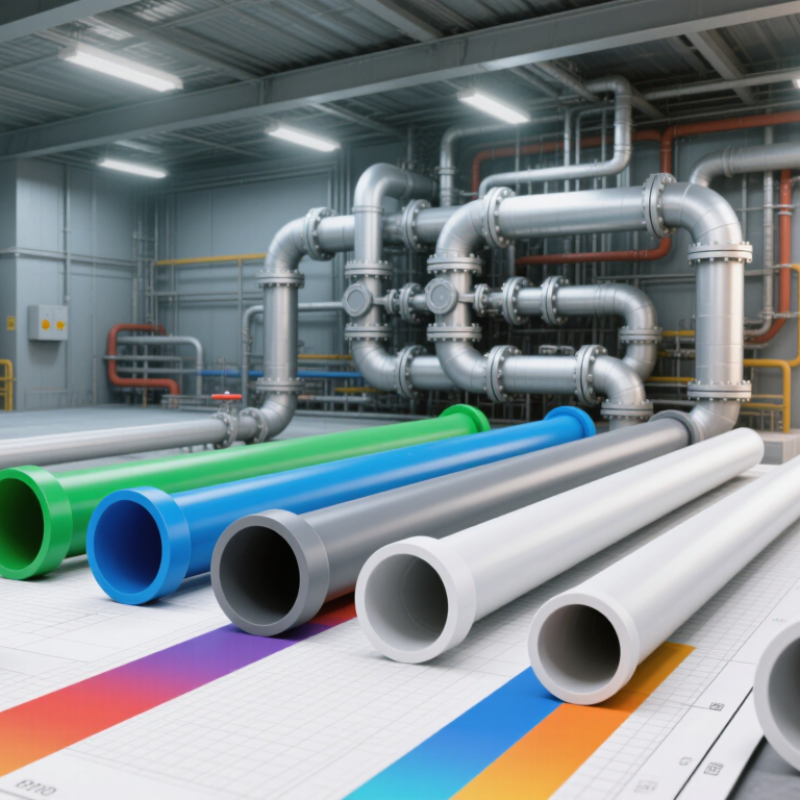
Polypropylene pipes are thermoplastic pipes made from durable, heat-resistant polymer materials. They are commonly produced as PP-R, PP-H, or PP-B, depending on their molecular structure and intended service. Their smooth inner walls support steady water flow and reduce deposits. Unlike metal, polypropylene does not rust or develop galvanic corrosion. This matters in humid coastal projects and chemical-processing areas. The pipe feels light.
Global buyers choose polypropylene because installation can be faster and cleaner. On-site teams can cut sections with basic tools and join them through controlled heat fusion. A properly fused joint becomes continuous and highly resistant to leakage.
This reduces weak connection points inside walls, plant rooms, and underground networks. Lower transport weight can also reduce handling costs. However, buyers should verify pressure ratings, temperature limits, and relevant drinking-water approvals. Do not assume every grade suits every application.
Selection still needs discipline. PP-R often serves hot and cold water systems, while PP-H may suit industrial chemical service. PP-B can be useful where flexibility and impact resistance are important. Actual performance depends heavily on wall thickness, support spacing, welding temperature, and installer training.
Outdoor exposure needs suitable protection because ultraviolet radiation can degrade unprotected plastic. Field inspections often reveal poor alignment rather than poor material as the real failure source. It is not universal. A reliable specification should state the fluid, operating temperature, pressure, installation environment, and required testing procedure before procurement begins.
Polypropylene pipe selection starts with polymer structure, not color or surface gloss. PP-R uses random copolymer chains, giving balanced toughness and heat resistance for hot and cold water. PP-RCT modifies that structure through a different crystallinity pattern. It can support higher pressure at elevated temperatures when calculations and wall thickness are correct. PP-H has a more rigid molecular structure. It suits chemical handling and industrial systems, but may become less forgiving in cold conditions. PP-B contains block copolymer segments. This improves impact strength during transport and installation.
The pipe wall also changes performance. Solid-wall pipes have one uniform polypropylene layer. They are easy to fuse and inspect. Fiber-reinforced pipes add a stabilizing middle layer, reducing thermal expansion and movement. Aluminum-layer pipes reduce expansion further, but require careful peeling before socket fusion. That extra step is often underestimated. Multilayer construction can improve geometry, yet poor bonding or uneven wall thickness creates weak points. Buyers should request cross-section samples, pressure ratings, temperature limits, and independent test records. A polished brochure is not enough.
For global projects, fittings and joining methods must match the pipe structure. Heat fusion creates a continuous joint, but time, temperature, and alignment matter. Field inspections often reveal teams focusing on resin grade while ignoring support spacing. This assumption is too simple. Poor spacing can cause sagging, noise, or joint stress. Selection should reflect water chemistry, outdoor exposure, operating cycles, and local installation skills. There is no universally best type. A suitable pipe can still fail with the wrong wall series or fusion procedure.
Choosing polypropylene pipe starts with operating conditions, not a catalog label. PP-R suits hot and cold water systems, while PP-RCT can retain pressure capacity at elevated temperatures. PP-H often fits industrial chemical service, but compatibility depends on concentration, temperature, and exposure time. A fluid that looks harmless at 20°C may behave differently near 80°C. Record the real operating range, not only the design average. Short sentences help. Peaks matter.
Pressure selection needs more than a PN marking. Check the pipe’s SDR, wall thickness, joint method, and temperature derating. A line rated for 10 bar at 20°C may allow less pressure at higher temperatures. Include surge pressure from pumps and rapid valve closure. For long runs, calculate thermal expansion and support spacing. I have seen sound pipe fail because anchors were missing, not because the resin was unsuitable. Installation quality remains part of pipe performance.
Match the bore to flow velocity, viscosity, and allowable pressure loss. Abrasive slurries, concentrated acids, and solvents require separate compatibility checks. Ask for third-party test data, certificates, dimensional tolerances, and fusion procedure records. Confirm applicable ISO requirements and local approvals for the intended service. Sample testing is sensible when the fluid is unusual. It is not perfect, but it exposes assumptions early. Do not select by price alone. A thinner wall may reduce cost while shortening the safety margin. Review temperature, fluid chemistry, pressure, and maintenance access together before approving the specification.
For global buyers, polypropylene pipe selection should begin with standards, not price. PP-R, PP-RCT, PP-H, and PP-B serve different temperature, pressure, and chemical environments. ISO 15874 is widely referenced for hot and cold water systems. Some markets also require EN or ASTM-based testing. Check the exact standard edition, product scope, and pressure class.
A certificate can look impressive and still be irrelevant. Verify whether it covers the pipe, fittings, and intended application. Drinking-water projects may require NSF/ANSI/CAN 61, WRAS, ACS, or an equivalent local approval. ISO 9001 shows quality-management control, but it does not prove product performance. Ask for independent laboratory reports covering hydrostatic pressure, dimensions, melt flow rate, and joint performance. Certificates should show a valid date, test method, laboratory identity, and matching product grades.
Traceability matters during real installation. Each pipe should carry readable markings, including size, SDR, material type, production batch, and manufacturing date. Inspecters should compare these details with packing lists and test records. Confirm resin origin, stabilizer content, UV protection, and storage conditions before shipment. Sun exposure and heat can damage unprotected pipe. Fusion compatibility also deserves a field check; similar colors do not guarantee identical formulations. Quality control is never perfect, and paperwork can hide weak sampling. A small pilot order, witnessed inspection, and retained samples often reveal more than a polished brochure.
For global buyers, the best polypropylene pipe is not always the cheapest option. PP-R suits hot and cold water systems, while PP-H often serves industrial chemical applications. PP-B can perform well in drainage and lower-pressure networks. Reinforced grades may reduce expansion, but they usually increase purchasing cost. Compare pressure class, SDR, wall thickness, temperature rating, and certification against ISO 15874 or relevant regional standards. A datasheet is not enough.
Supplier comparison should include resin origin, production capacity, batch testing, tooling quality, and warranty terms. Request recent test records for hydrostatic pressure, impact resistance, and dimensional stability. The PlasticsEurope Plastics—The Fast Facts 2024 report records more than 400 million tonnes of global plastics production in 2022, showing the scale of resin supply, but availability still changes by region. Compare landed cost, not factory price. Include tooling, inspection, inland transport, insurance, customs, and storage. A low quote can still be the wrong answer.
Tips: Ask three suppliers for the same pipe specification and packing plan. Check whether fittings use matching pressure ratings. For delivery, compare EXW, FOB, CIF, and delivered options carefully. UNCTAD’s Review of Maritime Transport 2024 notes that maritime shipping carries over 80% of world trade by volume, so port congestion can affect project schedules. Keep buffer stock for critical projects. I would not trust a promised 20-day delivery without production evidence. Supplier communication matters, but it is difficult to measure. A small trial order may reveal more than a polished presentation.

We have over 30 years of experience in designing complete hydraulic systems, repairs and distribution of fluid power equipment and parts.
FOLLOW US ON :
Address:
4020 SE 45th CT.
Ocala, FL 34480
Phone No:
Email:
sales@cunninghamfluidpower.com