

China Best Hydraulic Power Unit Manufacturers
China Best Hydraulic Power Unit Manufacturers is more than a supplier list. It is a practical guide for engineers, equipment buyers, and maintenance teams comparing Chinese manufacturers. A dependable Hydraulic Power Unit must deliver steady pressure, clean flow, safe heat control, and repeatable performance. The right choice also depends on application details, including cycle time, cylinder size, ambient temperature, oil viscosity, and available installation space.
Peter Nachtwey, a respected hydraulics and motion-control specialist, says, “Good hydraulic design begins with understanding the application, not choosing the biggest pump.” That principle matters on a factory floor. An oversized motor can increase energy use. A small reservoir can raise oil temperature. Poor filtration can quietly damage valves and pumps. These issues may not appear during a short factory test.
This introduction examines manufacturers through an experience-based and technical lens. It considers engineering capability, component quality, customization, testing procedures, documentation, and after-sales support. It also looks at visible details, such as welded tank quality, manifold finishing, hose routing, pressure-gauge placement, and noise control. These clues often reveal production discipline.
No supplier is perfect. Even strong manufacturers may have uneven documentation or delayed communication. That deserves attention. Buyers should request drawings, test records, material information, and clear warranty terms before approval. Factory visits, sample inspections, and application trials can expose weaknesses early. A reliable manufacturer does not merely promise performance. It explains limits, accepts questions, and provides evidence. That is where trust begins.
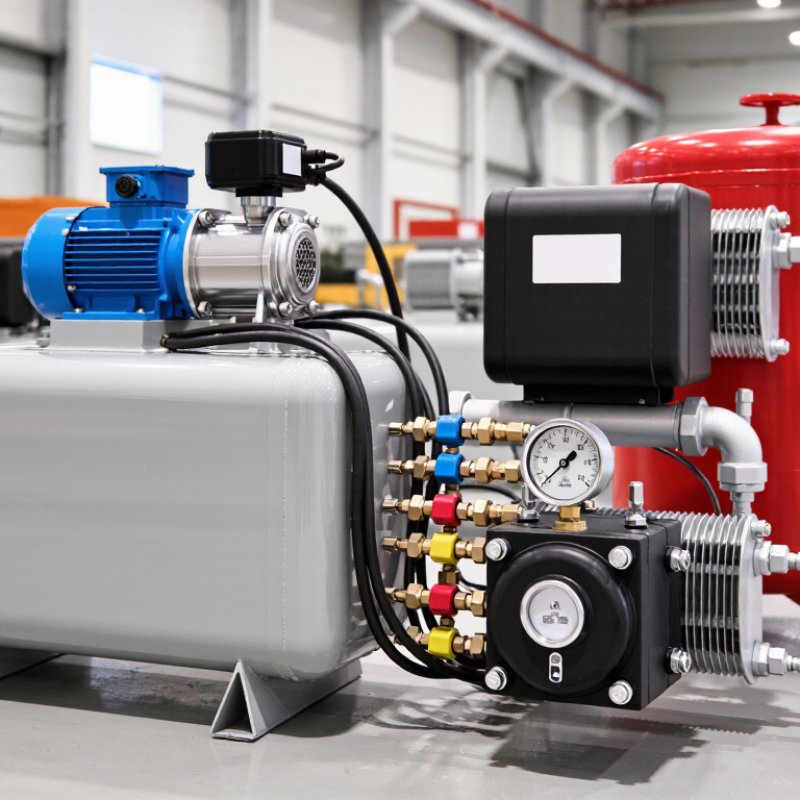
What Defines a Leading Hydraulic Power Unit Manufacturer in China
A leading hydraulic power unit manufacturer in China is defined by more than factory size or export volume. Its engineers should understand pressure, flow, heat, noise, and duty cycles in real equipment. They ask about working conditions before recommending a pump, valve, reservoir, or motor. That habit prevents expensive mismatches. Field experience matters. A unit tested only on a clean workshop bench may behave differently inside a dusty machine or a cold outdoor enclosure. Reliable manufacturers use design calculations, simulation where useful, and practical assembly checks.
Quality becomes visible through repeatable testing. Each unit should receive pressure, leakage, flow, electrical, and noise checks based on documented procedures. Serial records should link components to inspection results. Clear drawings, wiring diagrams, manuals, and spare-parts guidance help buyers install and maintain equipment safely. Professional manufacturers also understand international technical requirements and communicate limits honestly. They should explain oil compatibility, temperature ranges, filtration needs, and expected service intervals without hiding difficult details. Small details matter. A clean reservoir, protected connector, and accessible test port can reduce downtime.
Responsiveness separates a supplier from a long-term manufacturing partner. Engineers should answer technical questions with measurements, not vague promises. After delivery, they need to investigate unusual vibration, slow cycling, or overheating through evidence. No manufacturer is flawless. The stronger ones record failures, identify root causes, and improve designs. Sometimes a cheaper configuration looks attractive, yet weak filtration or an undersized motor creates later costs. Buyers should review sample reports, factory communication, customization capability, and after-sales support before placing an order.
China Best Hydraulic Power Unit Manufacturers - What Defines a Leading Hydraulic Power Unit Manufacturer in China
| Evaluation Dimension | Typical Industry Benchmark | Importance | What a Leading Manufacturer Should Demonstrate |
|---|---|---|---|
| Engineering and Design Capability | Application-specific hydraulic circuit design, 3D modeling, and technical documentation | High | The manufacturer should be able to select pumps, motors, valves, reservoirs, filtration systems, and control components according to the required pressure, flow, duty cycle, installation space, and operating environment. |
| Pressure Range | Common hydraulic power units operate around 70–250 bar; specialized systems may operate at higher pressures | High | The stated working pressure, maximum pressure, and safety relief setting should be clearly identified. Ratings should match the selected pump, valves, seals, piping, and fittings rather than relying only on the weakest component. |
| Flow Capacity | Small and medium power units commonly cover approximately 1–100 L/min, depending on the application | High | Flow capacity should be calculated from actuator speed, displacement, cycle time, and system efficiency. A reliable supplier should provide flow-pressure curves or verified operating data for the selected pump and motor combination. |
| Motor and Pump Matching | Correct motor power based on pressure, flow, efficiency, duty cycle, and supply voltage | High | A professional manufacturer should verify motor starting requirements, continuous and intermittent duty, rotation direction, voltage, frequency, pump displacement, and heat generation before finalizing the power unit. |
| Reservoir Design | Tank volume commonly sized at approximately 2–4 times the pump flow per minute, subject to system conditions | Medium | The reservoir should provide adequate cooling, deaeration, contamination control, access for maintenance, and sufficient usable volume. The final size should also consider cycle time, ambient temperature, and installation restrictions. |
| Component Quality | Industrial-grade pumps, valves, motors, filters, seals, gauges, and electrical components | High | A leading manufacturer should provide component specifications, material information, compatibility details, and traceability for critical parts. Hydraulic and electrical components should be selected for the actual load and environmental conditions. |
| Filtration and Cleanliness | Suction protection, return-line filtration, and, where necessary, pressure-line or offline filtration | High | The system should define filter location, filtration rating, bypass protection, indicator type, and maintenance requirements. Clean assembly practices are essential because particulate contamination can damage pumps and precision valves. |
| Testing and Validation | Pressure testing, leak inspection, functional testing, electrical checks, and noise or temperature verification where applicable | High | Before shipment, the manufacturer should record test pressure, operating pressure, flow, motor current, valve response, leakage condition, control functions, and any customer-specific acceptance requirements. |
| Standards and Documentation | Use of applicable ISO, IEC, electrical safety, pressure equipment, and customer-specific requirements | High | The supplier should provide hydraulic schematics, wiring diagrams, bills of materials, operating instructions, maintenance schedules, spare-parts information, and inspection records. Certification requirements should be confirmed for the destination market. |
| Customization Capability | Customized reservoir dimensions, mounting positions, manifold blocks, control logic, voltage, connectors, and communication interfaces | High | A capable manufacturer should convert equipment requirements into a documented design, issue drawings for approval, manage engineering changes, and provide prototype or sample validation before mass production. |
| Energy Efficiency | Reduced unloading losses, correctly sized components, and variable-speed or load-sensing solutions where justified | Medium | The manufacturer should evaluate pressure-compensated pumps, variable-speed drives, accumulator circuits, efficient motor selection, and heat-management strategies when the application has long idle periods or highly variable demand. |
| Noise and Heat Management | Noise and oil temperature controlled within the limits required by the application and component manufacturers | Medium | Good design practice includes appropriate pump speed, rigid mounting, flexible connections, anti-vibration measures, adequate oil volume, cooling capacity, and protection against excessive back pressure or restricted return flow. |
| Manufacturing and Quality Control | Controlled assembly processes, incoming inspection, in-process checks, final inspection, and traceable records | High | A dependable supplier should maintain documented quality procedures, calibrated measuring equipment, inspection checkpoints, nonconformance handling, and serial or batch traceability for finished hydraulic power units. |
| Delivery and Project Management | Clearly defined engineering approval, production, testing, packaging, and shipment milestones | Medium | The supplier should communicate realistic lead times, confirm long-lead components early, provide progress updates, protect products during transport, and supply export documents appropriate to the destination and shipment method. |
| After-Sales Technical Support | Installation guidance, troubleshooting assistance, spare-parts support, and maintenance recommendations | High | Post-delivery support should include commissioning guidance, fault diagnosis, replacement-part identification, warranty procedures, and access to technical personnel who understand the specific hydraulic circuit supplied. |
| Total Cost of Ownership | Purchase price evaluated together with energy use, maintenance, downtime, component life, and spare-parts availability | High | The most competitive manufacturer is not necessarily the lowest-cost supplier. A sound comparison should include operating efficiency, service intervals, expected component life, warranty terms, repairability, and the cost of production interruptions. |
Related Posts
-
China Top 10 Hydraulic Unit Manufacturers to Buy From?
-
2026 Top Hydraulic Power Unit Types for Global Buyers
-

Ultimate Guide to Choosing the Right Hydraulic Power Unit for Your Industrial Needs
-
Comprehensive Handbook to Mastering Hydraulic Equipment Repair for Global Buyers
-
How to Choose Hydraulic Services in 2026?
-

Top 5 Hydraulic Piston Pump Options for Global Buyers?

We have over 30 years of experience in designing complete hydraulic systems, repairs and distribution of fluid power equipment and parts.
FOLLOW US ON :
Contact Details
Address:
4020 SE 45th CT.
Ocala, FL 34480
Phone No:
Email:
sales@cunninghamfluidpower.com