

China’s Muffle Furnace market offers buyers a wide range of designs, from compact benchtop units to large chamber furnaces. This guide compares ten manufacturers for 2026, focusing on practical details: maximum operating temperature, chamber dimensions, temperature uniformity, control systems, and service support. A bright digital display is useful, but it cannot compensate for unstable temperature performance or unclear specifications.
Heat-treatment authority Daniel H. Herring is known for his work on process control. The following line is an editorial summary, not a verified quotation from him: “Choose a furnace by the consistency of its process, not by its headline temperature.” That distinction matters. A laboratory handling small ceramic samples may need different features than a production team firing metal parts. Door clearance, insulation, ramp-rate control, and calibration options can affect everyday use. Small details count.
This ranking is a starting point, not a substitute for technical review. Manufacturers may revise models, specifications, and support arrangements, so buyers should confirm current details directly. A shortlist can narrow the field. It cannot test a furnace in your workspace.
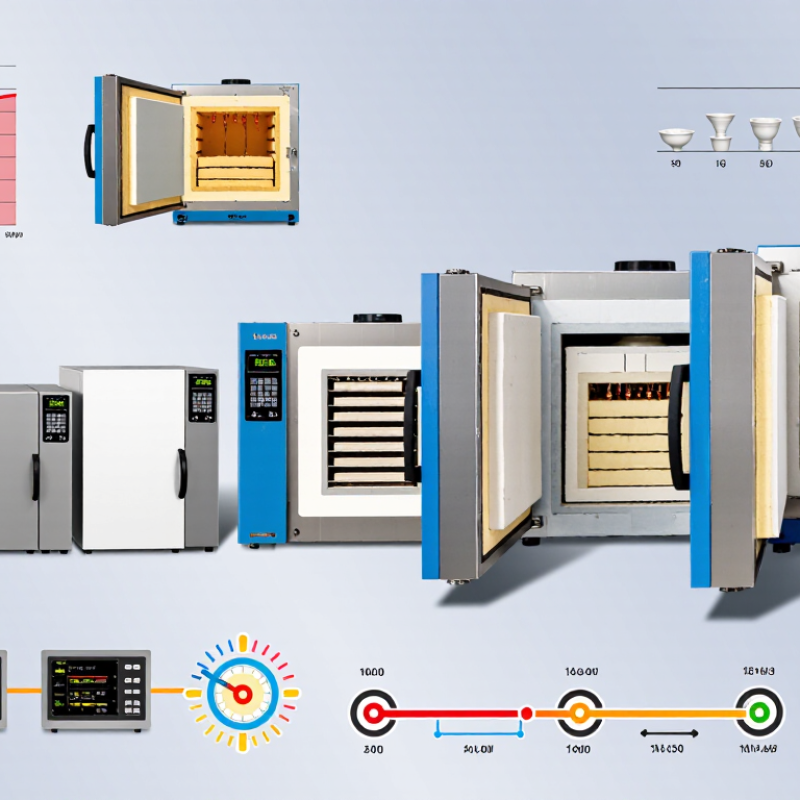
A muffle furnace is a heated chamber designed to process samples at controlled temperatures. Its heating elements warm an insulated interior, while the sample remains separate from direct flame and many combustion byproducts. That separation matters. It can help produce more consistent results, though it does not prevent every form of contamination.
Laboratories use muffle furnaces for ash testing, material analysis, ceramic work, and heat treatment. For example, a technician may place a weighed sample in a ceramic crucible, heat it, then compare its mass before and after processing. Universities and quality-control facilities also use these furnaces to study how materials respond to heat. Results depend on more than the set temperature: sample size, placement, heating rate, and cooling conditions can all affect outcomes. The label “high temperature” alone tells you little about a furnace’s suitability.
Tips: Match the chamber size and temperature range to your actual samples. Use compatible crucibles, keep samples spaced apart, and record heating and cooling conditions. Check the manual before changing a program. A small detail, such as a crowded chamber, can undermine an otherwise careful test.
When comparing muffle furnace manufacturers in 2026, match the equipment to the work, not just the advertised maximum temperature. A furnace rated for high heat may still be unsuitable for long, repeatable cycles. Ask for the usable chamber dimensions, recommended load limits, and temperature range under normal operating conditions. Small details matter.
Review temperature uniformity and control stability using test reports, not vague claims. Request information on sensor type, calibration procedures, and how often calibration is recommended. Check insulation quality, heating-element design, and the availability of replacement parts. Safety features should include over-temperature protection and clear operating instructions. A neat control panel is useful, but it cannot prove dependable performance.
Service matters after installation. Ask how technical support is delivered, what training is included, and whether spare parts can be supplied over the furnace’s expected service life. Compare warranty terms carefully; coverage may exclude components that wear during ordinary use. No checklist catches every mismatch. A supplier’s answers should be specific and supported by documents, though paperwork alone is not proof of quality. If possible, assess a demonstration or sample test using a load similar to your own. That extra step can reveal practical limits before purchase.
| China Top 10 Muffle Furnace Manufacturers in 2026 — Key Criteria for Evaluating Muffle Furnace Manufacturers | |||
|---|---|---|---|
| Evaluation Criterion | What to Compare | Evidence to Request or Verify | Suggested Weight |
| Maximum operating temperature | Confirm the rated maximum temperature and the recommended continuous working temperature. These are not necessarily the same. | Technical datasheet stating both ratings; confirm the rating applies to the proposed chamber size and heating-element configuration. | 15% |
| Temperature uniformity | Assess the temperature variation across the usable chamber volume at the intended setpoint and operating conditions. | Uniformity test report specifying the test temperature, measurement locations, stabilization time, and acceptance limits. | 12% |
| Temperature control and stability | Compare controller functions, sensor type, programmable ramps and holds, and the ability to maintain the target temperature. | Controller specifications, sample program details, sensor information, and test data for stability or control performance. | 10% |
| Heating elements and serviceability | Check the element material and design against the specified operating range, atmosphere, and expected duty cycle. | Element specifications, replacement instructions, spare-part availability, and stated limitations on atmosphere or use. | 10% |
| Chamber size and usable workspace | Compare internal dimensions, loading clearance, shelf options, and the usable volume—not just the external footprint. | Dimensioned drawings and confirmation that the proposed load and accessories fit while allowing appropriate airflow and clearance. | 10% |
| Safety features | Review over-temperature protection, door-related safeguards, electrical protection, and safe operating instructions. | Safety feature list, wiring or safety documentation, operating manual, and details of any independent over-temperature control. | 10% |
| Calibration and measurement traceability | Determine whether temperature measurement and calibration services meet the buyer’s quality requirements. | Sample calibration records; verify the measured range, instrument identification, uncertainty information, and traceability details. | 8% |
| Construction and insulation | Compare chamber materials, insulation design, door sealing, and the stated suitability for the intended workload. | Construction specifications, maintenance guidance, and documented operating limits for the chamber and insulation. | 8% |
| Warranty, service, and spare parts | Evaluate warranty coverage, technical support arrangements, repair processes, and access to consumable or replacement parts. | Written warranty terms, service response process, spare-parts list, and confirmation of support for the installation location. | 9% |
| Documentation and delivery readiness | Check whether the supplier provides clear specifications, operating guidance, installation requirements, and delivery information. | Manual, datasheet, packing and installation requirements, commissioning options, and a written quotation covering the requested configuration. | 8% |
| Total suggested evaluation weight | 100% | ||
Use the same test conditions and evidence requirements for every supplier. The weights are a comparison framework, not a verified ranking; confirm manufacturer-specific specifications and test results before purchase.
China’s Top 10 Muffle Furnace Manufacturers in 2026 reflects a competitive field serving laboratories, universities, and industrial testing facilities. Buyers should compare more than advertised maximum temperature. Chamber size, temperature uniformity, heating rate, and insulation design affect daily performance. Small details matter.
A useful assessment begins with the intended workload. For example, a laboratory processing ceramic samples may need stable temperature control and a chamber that fits its crucibles without crowding. Check the thermocouple type, controller functions, over-temperature protection, and availability of calibration records. Ask manufacturers for test data under stated conditions, not just broad performance claims. Clear answers are a good sign.
The top ten should be viewed as a shortlist, not a universal ranking. Production capacity, customization options, quality checks, and after-sales support can differ considerably. Request drawings, operating instructions, and details about spare parts before comparing quotations. A lower price may not include suitable installation guidance or service coverage. That can become frustrating later. Even a well-built furnace may not suit every process, and published specifications do not always reveal real-world temperature variation. Verify the details against your own sample size, operating schedule, and required tolerances.
Comparing China’s muffle furnace manufacturers in 2026 means looking beyond advertised maximum temperature. A compact benchtop unit may reach 1,200°C, while a larger chamber trades heating speed for usable space. Ask for working-zone dimensions, not just chamber dimensions. Small distinction. Programmable ramp-and-soak profiles support repeatable tests, but only when sensor placement and calibration methods are clearly specified.
Technology comparisons should include temperature uniformity, heating-element type, insulation, and controller functions. Request uniformity data and test conditions; a single figure without context is hard to evaluate. For routine ash testing, a straightforward controller may be enough. Materials research may require tighter temperature control and more flexible programs. Some models offer optional data logging, but check which records are actually saved.
Build quality shows up in everyday details: how smoothly the door closes, whether the chamber lining is replaceable, and how easily technicians can access parts. A polished specification sheet can still hide awkward door clearance or slow recovery after loading. I would verify these points with a sample test or a detailed technical call. Even then, supplier comparisons can feel incomplete when service response times are not documented.
When comparing Chinese muffle furnace manufacturers, match the furnace to your actual process, not just its maximum temperature. Check usable chamber dimensions, rated temperature, heating rate, and temperature uniformity. Ask for test records showing performance across the chamber, not only at one sensor near the door. Request the thermocouple type, controller specifications, and calibration documentation. Small details matter.
The International Energy Agency’s Energy Efficiency 2023 report estimates that industry uses about 37% of global energy. That makes insulation, door sealing, and energy consumption useful comparison points, especially for frequent heating cycles. Ask suppliers for measured power use under stated test conditions; estimates alone are weak evidence. Also verify factory acceptance testing, warranty terms, spare-part availability, and response times. A low quotation can still be costly. I would want the supplier to explain how it handles temperature deviations, in writing. One point is easy to miss: a technically capable factory may still provide unclear documentation. Review a sample manual and inspection report before ordering, and confirm that the chamber volume suits your largest routine load.

We have over 30 years of experience in designing complete hydraulic systems, repairs and distribution of fluid power equipment and parts.
FOLLOW US ON :
Address:
4020 SE 45th CT.
Ocala, FL 34480
Phone No:
Email:
sales@cunninghamfluidpower.com