How to Choose the Right Sandblast Rubber Hose for Your Needs?
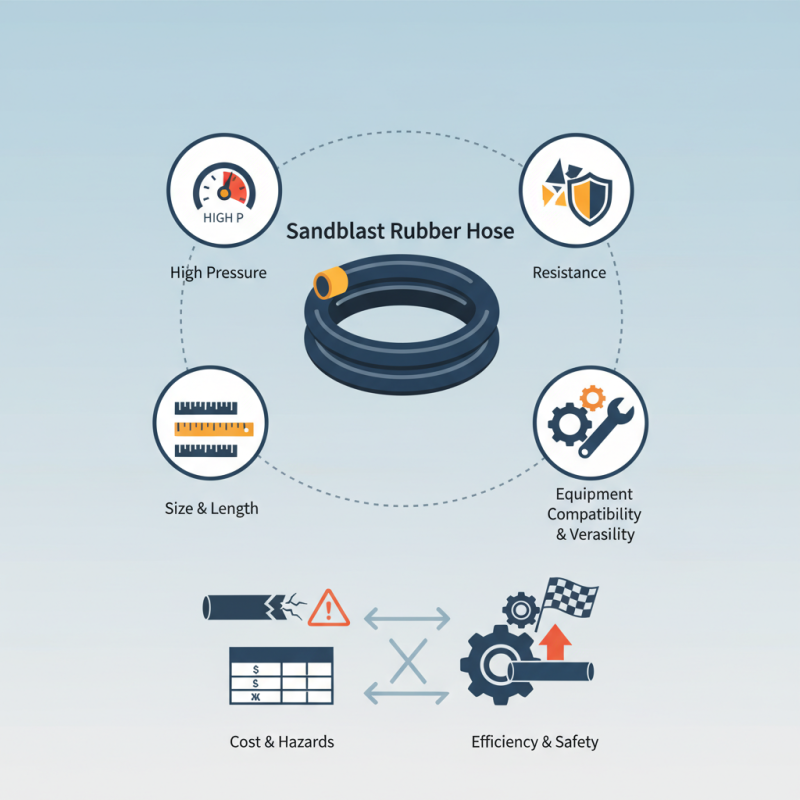
Choosing the right Sandblast rubber hose is crucial for successful blasting operations. The right hose can make a significant difference in performance and efficiency. It should withstand high pressure and abrasive materials during use.
One must consider various factors when selecting a sandblast rubber hose. Factors like size, length, and versatility matter greatly. An improperly chosen hose can lead to increased maintenance costs or even safety hazards.
Often, users overlook the importance of compatibility with their equipment. Not all hoses function well with every blasting system. Understanding specifications will help avoid costly mistakes. A thoughtful selection process can lead to better results and a smoother workflow.
Factors to Consider When Selecting Sandblast Rubber Hoses
Choosing the right sandblast rubber hose can seem challenging. The first factor to consider is the hose's diameter. A larger diameter allows for higher flow rates. However, this might not be necessary for smaller projects. Assess your needs carefully.
The material of the hose is also crucial. Look for durability against wear and tear. Rubber hoses with reinforced layers often last longer. Temperature tolerance is another key aspect. High heat can affect rubber integrity. Always check the specifications before purchasing.
Lastly, consider the length of the hose. A longer hose allows for more flexibility. However, it may lead to pressure loss. Shorter hoses offer better pressure but limit movement. Reflect on your workspace layout. This will help determine the best length for your needs.
Understanding Different Types of Sandblast Rubber Hoses Available
When choosing a sandblast rubber hose, it’s essential to understand the different types available. There are primarily two categories: heavy-duty and light-duty hoses. Heavy-duty hoses withstand high pressure and are ideal for industrial applications. They often have a thicker wall and can handle more abrasive materials. Light-duty options are more flexible and are suitable for smaller projects.
The material of the hose also impacts performance. For instance, synthetic rubber hoses tend to resist wear better than natural rubber. Reports suggest that synthetic varieties can last up to 50% longer when used under similar conditions. This durability may save costs in the long run but can make choosing challenging. Users may hesitate, balancing upfront costs against long-term efficiency.
Flexibility is another vital factor. Some users might find stiffer hoses hard to maneuver in tight spaces. This could hinder productivity, leading to frustrations. Ideally, a hose should offer both durability and flexibility. Not every hose meets these criteria, leading to reflection on what best suits specific needs. Understanding these options ensures better decisions when investing in sandblast rubber hoses.
Evaluating Hose Durability and Abrasion Resistance Ratings in Applications
When selecting a sandblast rubber hose, evaluating durability is crucial. Durability determines how long the hose lasts under harsh conditions. A report by the Rubber Association indicates that hoses with a high abrasion resistance rating often outperform others. The abrasion resistance is measured in cycles; the higher the number, the more robust the hose. For instance, hoses rated at 75 to 100 cycles show remarkable resilience compared to those below 50 cycles.
In many applications, the environment can significantly impact hose performance. Factors like temperature, pressure, and the type of abrasive material used can lead to wear and tear. A study shows that hoses exposed to high-pressure conditions lose strength quicker. This deterioration often leads to failures and unplanned downtime, costing businesses in time and money. It's vital to assess these ratings and understand specific operational needs. Not all hoses meet extreme conditions, and testing their limits is often necessary.
Choosing the right rubber hose involves careful consideration of these factors. Measuring abrasion resistance provides a clearer picture of what to expect. It's essential to actively seek out detailed specifications and compare different options. Engaging with user feedback and performance reports can reveal potential weaknesses in specific hoses. This approach ensures a better fit for your specific blasting needs.
Determining the Optimal Hose Length and Diameter for Specific Tasks
Choosing the right sandblast rubber hose requires careful consideration of hose length and diameter. The ideal length affects both mobility and efficiency. A short hose may restrict movement. Conversely, an overly long hose can create additional pressure loss, reducing performance. Finding the balance is essential. For small tasks, a 10-foot hose may suffice. For larger projects, consider extending up to 25 feet.
Diameter also plays a crucial role. A wider diameter allows for a greater flow of abrasive materials. This can speed up the blasting process, making it more effective. However, a too-wide diameter might be excessive for less demanding tasks. Standard sizes typically range from half an inch to an inch. Evaluating the specific requirements of your project is key.
Reflect on past experiences with hose length and diameter. Maybe a short hose made your task cumbersome. Or perhaps a wide diameter caused flickering pressure during use. Learning from these situations can help you choose wisely next time. It's about matching the hose to the specific demands of your work. Listening to both your needs and insights from prior tasks may direct you to the right choice.
Comparing Price Points and Brand Reliability in the Sandblast Hose Market
When choosing a sandblast rubber hose, it's essential to consider price points and brand reliability. According to industry reports, prices for sandblast hoses can range from $1 to $15 per foot. However, factors like durability and performance affect these prices. Lower-cost hoses might wear out faster. Investing in a more expensive option can lead to long-term savings.
Brand reliability plays a crucial role in ensuring a product's quality. A study by a leading industry analyst shows that 70% of customers report better performance with trusted brands. They experience fewer leaks and damage. However, reliable brands might come with a higher initial cost, often 20% to 30% more than lesser-known brands. This creates a dilemma when balancing cost against reliability.
Purchasing from unknown brands can be risky. Many users find themselves disappointed with performance after a few uses. This inconsistency can lead to additional replacement costs. It’s often tempting to opt for cheaper options. Still, investing in a dependable hose will enhance your project outcomes. In the competitive sandblast hose market, understanding these aspects is crucial for making informed decisions.