

Choosing the right Injection Molding Die in 2026 requires more than comparing supplier prices. It demands a careful reading of material behavior, part geometry, production volume, and expected service life. Grand View Research valued the global injection molding machine market at approximately USD 20.6 billion in 2023. It also projects continued growth through 2030. That expansion increases pressure on manufacturers to reduce waste, downtime, and tooling mistakes.
The numbers are significant. PlasticsEurope reported global plastics production of about 413.8 million tonnes in 2023. Every molded component carries practical consequences. A thin automotive panel may need balanced cooling and controlled warpage. A medical housing may require polished cavities, strict traceability, and repeatable dimensions. An Injection Molding Die that performs well for polypropylene may fail with glass-filled nylon. Material selection changes everything.
John Bozzelli, founder of Scientific Molding, often emphasizes, “The mold is the heart of the injection molding process.” His point remains highly relevant. The die controls filling, cooling, ejection, and much of the final part quality. Yet no selection formula is perfect. A low-cost die can become expensive after repeated repairs. A sophisticated die can also be excessive for a short production run. I would challenge the common assumption that the cheapest quotation is the safest choice. The better decision compares total ownership cost, maintenance access, cooling efficiency, steel grade, and supplier experience. This guide examines those factors for 2026, while recognizing that real production data should always challenge initial assumptions.
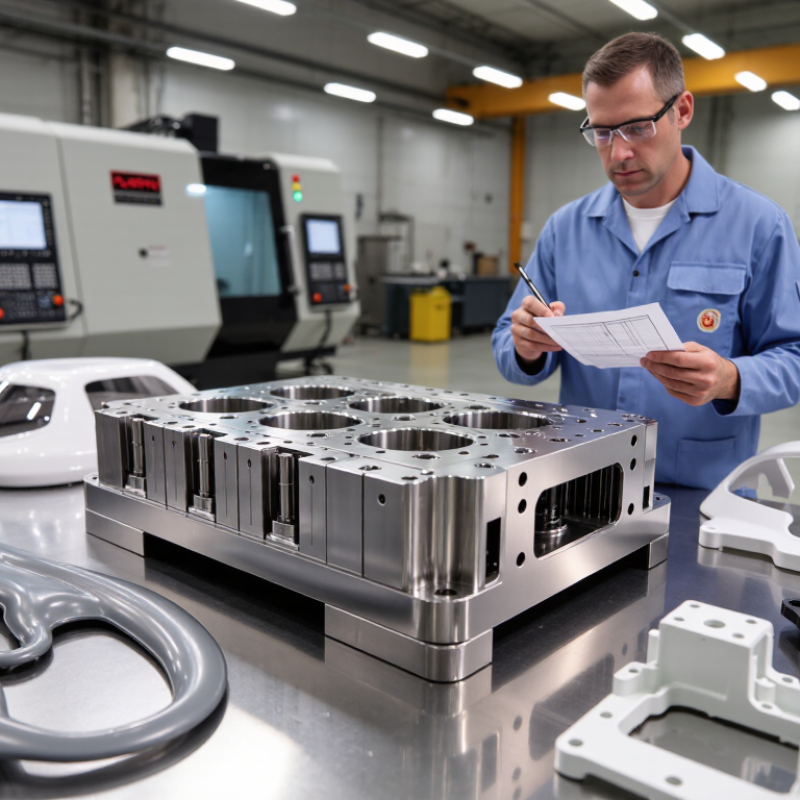
How to Choose the Right Injection Molding Die in 2026?
What Is an Injection Molding Die and How Does It Work?
In injection molding, a die is the engineered tool that shapes molten plastic into a finished part. Many engineers call it a mold. Both terms describe a similar production tool. The die contains a cavity and a core, which create the part’s external and internal surfaces. Heated plastic enters through the sprue, runner, and gate. Cooling channels then remove heat from the steel or aluminum tool. After solidification, ejector pins release the molded component.
A suitable die must match the resin, part geometry, production volume, and machine capacity. For example, glass-filled material can accelerate wear around gates and corners. Deep ribs may require carefully positioned slides or lifters. Thin walls need balanced filling and controlled cooling. Otherwise, warping, sink marks, or short shots may appear. Small details matter.
Practical tooling reviews often begin with flow analysis, steel selection, and maintenance access. A hardened tool may cost more initially, but it can withstand repeated cycles better. Aluminum tools can support faster prototype work, although their service life may be shorter. I have seen attractive designs fail because technicians could not clean narrow cooling passages easily. That mistake is easy to overlook. In 2026, sensors can monitor pressure, temperature, and cycle variation, but data cannot fix poor gate placement. Engineers should test the first articles, inspect dimensions, and question assumptions before approving full production.
How to Choose the Right Injection Molding Die in 2026?
Choosing the right injection molding die in 2026 starts with a clear product definition. Do not describe only its length, width, and color. Record wall thickness, ribs, bosses, draft angles, surface texture, and tight tolerances. A thin phone cover needs different cooling and gate planning than a thick industrial housing. Confirm how the part will be assembled, handled, and inspected. I have seen projects fail because a small snap-fit detail was ignored. Small details matter.
Material selection changes the die design. List resin type, glass-fiber content, shrinkage range, heat exposure, chemical contact, and recycled content. A material with high shrinkage may need balanced cooling and carefully positioned gates. Abrasion can also shorten the life of vulnerable mold components. Ask for current material data, not an old spreadsheet. Supplier data is useful, but actual trials may reveal different warpage. That is uncomfortable.
Production requirements determine whether a simple single-cavity die is enough. Define annual volume, target cycle time, machine size, automation level, changeover frequency, and acceptable scrap rate. For high output, multiple cavities may reduce unit cost, but they increase balancing and maintenance demands. Specify inspection points before the die is built. Request mold-flow analysis, cooling assumptions, steel selection, and maintenance access in writing. I would also challenge optimistic cycle-time promises. Real production includes pauses, cleaning, and occasional defects. Leave room for learning.
| Requirement Profile | Product Definition | Recommended Mold Type | Typical Material | Annual Volume | Cavity Range | Expected Mold Life | Indicative Dimensional Tolerance | Key Design Priority |
|---|---|---|---|---|---|---|---|---|
| Prototype and Market Test | Small enclosure, simple geometry, limited cosmetic requirements | Single-cavity, soft or pre-hardened steel mold | ABS, PP, or general-purpose thermoplastic | Up to 10,000 parts/year | 1 | Approximately 10,000–100,000 shots | About ±0.10–0.20 mm, depending on size and material | Low initial cost, fast modification, and short lead time |
| Low-Volume Commercial | Functional part with moderate appearance and repeatability requirements | 1–2 cavity, pre-hardened steel mold with standard ejection | PP, ABS, PC/ABS, or POM | 10,000–100,000 parts/year | 1–2 | Approximately 100,000–300,000 shots | About ±0.05–0.15 mm | Balanced tooling cost, cycle time, and maintainability |
| Medium-Volume Production | Multi-feature housing, clips, covers, or structural components | 2–8 cavity hardened steel mold with hot or cold runner system | PP, PC, PA, PBT, or glass-filled engineering plastic | 100,000–500,000 parts/year | 2–8 | Approximately 300,000–1,000,000 shots | About ±0.03–0.10 mm | Balanced filling, cooling uniformity, and cavity-to-cavity consistency |
| High-Volume Consumer Product | Small, repeatable parts with short cycle times and high output targets | 8–32 cavity hardened steel mold with hot runner and automatic ejection | PP, ABS, HDPE, or reinforced technical thermoplastic | 500,000–5,000,000 parts/year | 8–32 | Approximately 1,000,000–3,000,000 shots | About ±0.02–0.08 mm | Cycle-time reduction, balanced runner layout, and automated part removal |
| Precision Engineering Part | Gears, connectors, seals, optical features, or tight-fit components | Precision single- or multi-cavity mold with hardened inserts | POM, LCP, PEEK, PA, or glass-filled engineering plastic | 50,000–1,000,000 parts/year | 1–16 | Approximately 500,000–2,000,000 shots | About ±0.01–0.05 mm, subject to drawing and process capability | Steel selection, shrinkage control, venting, and thermal stability |
| Large Structural Component | Large panel, appliance housing, automotive trim, or thin-wall shell | Large single- or 2-cavity mold with hydraulic or servo-assisted mechanisms | PP, ABS, PC/ABS, TPO, or glass-filled PP | 50,000–500,000 parts/year | 1–2 | Approximately 300,000–1,000,000 shots | About ±0.10–0.30 mm, depending on part size and warpage | Warpage prevention, uniform cooling, mold rigidity, and safe ejection |
| Medical or Regulated Component | Clean, traceable, high-repeatability part with validated process requirements | Precision hardened steel mold with polished cavities and validated hot or cold runner system | Medical-grade PP, PC, POM, PA, or other specified resin | 100,000–5,000,000 parts/year | 1–32 | Approximately 500,000–3,000,000 shots | About ±0.02–0.10 mm, according to the approved drawing | Surface finish, contamination control, documentation, validation, and repeatability |
How to Choose the Right Injection Molding Die in 2026?
Comparing Die Designs, Materials, and Manufacturing Standards
A reliable injection mold begins with the part, not the catalog. I check wall thickness, draft angles, gate position, ejection space, and expected cycle time. A simple two-plate design can reduce maintenance, while complex parts may require slides or lifters. Cooling channels deserve close attention. Uneven cooling can leave visible sink marks, warpage, and longer cycles. I still sometimes over-specify the mold. That adds cost without improving the part.
Material selection should follow production volume and resin behavior. Aluminum suits prototypes and shorter runs, but hardened tool steel supports demanding production. Pre-hardened steel offers a practical middle ground. Plastics Europe reported 413.8 million tonnes of global plastic production in 2023, showing the scale of material variation. Engineers should compare wear resistance, thermal conductivity, corrosion resistance, and repairability. A low purchase price can become expensive after repeated polishing or insert replacement.
Manufacturing standards make comparisons less subjective. ISO 20457 helps define tolerances for injection-molded plastic parts, while ISO 9001 supports controlled quality processes. ASTM A681 provides useful guidance for tool-steel selection. The 2024 Injection Molding Machine Market analysis by Grand View Research estimated continued market growth through 2030, reflecting rising demand for consistent, automated production. Still, reports cannot replace a mold-flow study, steel certificate, dimensional inspection, and trial shots. Ask for measured results. Not promises.
How to Evaluate Costs, Quality, Maintenance, and Service Life
Choosing an injection molding die in 2026 requires more than comparing purchase prices. In production reviews, I separate the quoted cost from the cost of ownership. A low bid may exclude steel certification, trial shots, spare inserts, or transport. Ask for a line-by-line quotation. Then estimate machining hours, press downtime, scrap, and expected cycle volume. A die costing $20,000 more may pay back through fewer adjustments and less rejected material. Numbers can mislead.
Quality should be tested with evidence, not attractive sample parts. Check dimensional reports, cavity balance, cooling performance, venting, and surface consistency. Request samples from production-intent material and realistic machine settings. Measure critical features after cooling, not immediately after ejection. A qualified engineer should review tolerances against actual function. Overly tight tolerances often raise costs without improving the product.
Maintenance planning determines whether the die remains profitable after launch. Confirm access to wear components, lubrication points, cleaning procedures, and repair records. Ask how many cycles the design should survive under your material and pressure. Harder steel may extend service life, but it can increase machining time and repair difficulty. My own evaluations have occasionally favored durability and overlooked changeover speed. That mistake matters when product variants run weekly. Leave room for preventive maintenance, spare parts, and an honest review after the first production month.
Selecting the right injection molding die in 2026 begins with evidence, not catalog pictures. PlasticsEurope’s Plastics—The Fast Facts 2024 reports 413.8 million tonnes of global plastics production in 2023. That scale increases pressure on cycle time, repeatability, and material efficiency. Define the resin, annual volume, part weight, tolerances, and expected tool life before requesting quotations. A beautiful die can still be wrong.
I validate the design through mold-flow analysis, cooling-channel review, and a documented design-for-manufacturing check. ISO 20457 provides useful guidance for injection-molded part tolerances, but real parts often need tighter control than generic tables suggest. Check gate location, weld lines, draft angles, ejection marks, and shrinkage assumptions. Then run controlled trials. Record fill time, pressure, cooling time, warpage, dimensions, and defect locations. Measure several shots, not one lucky sample. Short trials reveal problems.
Quality evidence matters. The ISO Survey of Management System Standards 2023 shows more than one million ISO 9001 certificates worldwide, highlighting the value of controlled processes and traceable records. Ask for steel certificates, heat-treatment records, inspection reports, and a maintenance plan. Confirm critical dimensions with calibrated equipment. Capability indices such as Cpk can support decisions, but they do not replace engineering judgment. My own caution is simple: simulation results can look precise while material data remains incomplete. Validate the die with production resin, realistic settings, and the operator who will run it. That last detail is easy to miss.
Typical service-life benchmarks help match mold construction to production volume, material requirements, and validation risk.
Aluminum molds are commonly selected for prototypes and short production runs, while hardened and corrosion-resistant steels are more suitable for high-volume production, abrasive resins, or demanding dimensional stability. Actual service life depends on part geometry, resin, cycle time, cooling design, maintenance, and operating conditions.

We have over 30 years of experience in designing complete hydraulic systems, repairs and distribution of fluid power equipment and parts.
FOLLOW US ON :
Address:
4020 SE 45th CT.
Ocala, FL 34480
Phone No:
Email:
sales@cunninghamfluidpower.com