

China has become a major sourcing destination for conveyor components, including rollers used in mining, ports, warehouses, and manufacturing plants. Yet choosing among Belt Conveyor Roller Manufacturers requires more than comparing catalog prices. A polished website can hide inconsistent tube thickness, weak seals, or poor balancing during rotation.
This article explores which Chinese manufacturers deserve serious attention and why. It considers production experience, engineering capability, material selection, quality control, and after-sales support. Practical indicators include bearing protection, shaft precision, rubber disc bonding, weld quality, and measured runout. Details matter. A roller may look identical in a photograph, but its performance changes under dust, moisture, heavy loads, and long operating hours.
Reliable suppliers should provide clear drawings, testing records, traceable materials, and realistic delivery commitments. Factory audits, sample testing, and conversations with existing customers can reveal more than promotional claims. However, no supplier is perfect. Even experienced manufacturers may have weaknesses in communication, customization, or overseas service. That deserves attention.
The following discussion uses a balanced, evidence-based approach to compare leading Chinese producers. It does not treat scale as proof of quality. Instead, it examines how each company supports dependable conveyor operation in real working environments. Buyers should still verify certifications, technical data, production capacity, and warranty terms before signing a contract. Claims require checking. That is where careful sourcing begins.
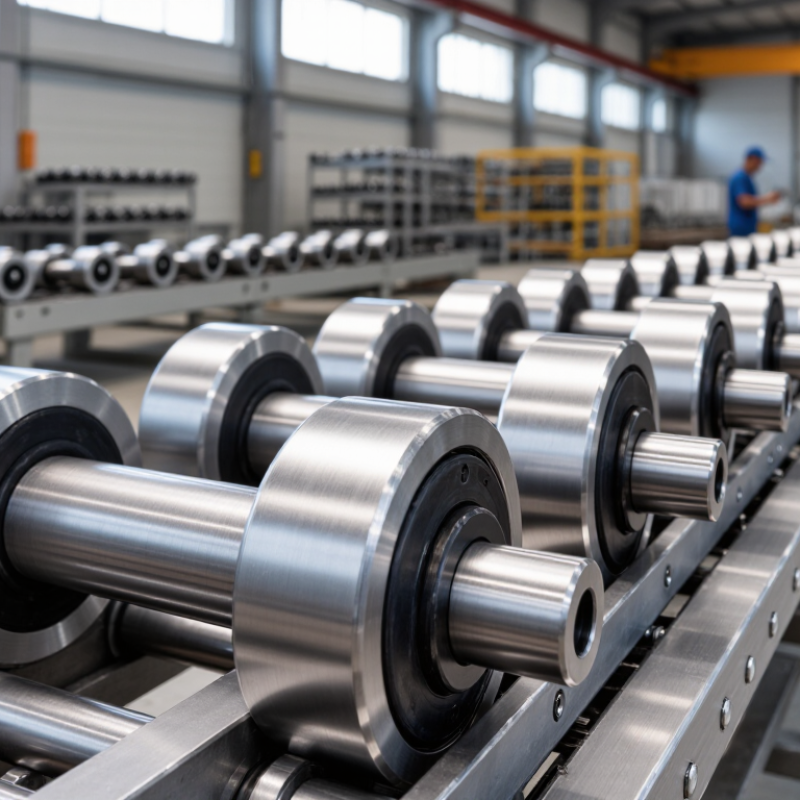
Belt conveyor rollers are cylindrical components that support and guide a moving conveyor belt. They are mounted along the conveyor frame, beneath the belt, and often at loading or turning points. A typical roller contains a steel or polymer tube, a shaft, bearings, and seals. Small parts, but important ones.
As the belt carries material, rollers help reduce friction and keep the belt’s path stable. Carrying rollers support the loaded section, while return rollers hold the belt on its way back. Impact rollers may sit beneath loading zones, where falling material can strike the belt with force. Their spacing and alignment affect belt sag, tracking, and energy use. Even a slight misalignment can cause persistent edge wear.
Roller quality matters in daily operation. Poorly sealed bearings may admit dust or moisture, leading to noise, heat, or early failure. A technician can check for uneven rotation, looseness, and unusual sounds during routine inspections. It is not always obvious which roller caused a tracking problem, though; belt tension and frame alignment can also contribute. That uncertainty is worth remembering. Selecting rollers should account for load, speed, material, and working conditions, rather than appearance alone. A clean-looking roller may still hide a worn bearing.
China has become a major source of conveyor roller manufacturers because its industrial supply chain is unusually complete. Steel tubes, bearings, seals, rubber rings, and machining services are often available within the same manufacturing region. This shortens production time and reduces transportation costs. It also supports practical customization for mining, ports, warehouses, and bulk-material systems.
Factory experience matters here. During supplier evaluations, buyers can inspect tube welding, shaft machining, bearing assembly, and dynamic testing in one visit. Reliable manufacturers usually provide material records, dimensional reports, load data, and traceable inspection procedures. Many factories also produce rollers for different belt widths, temperatures, and dust conditions. However, low pricing can hide uneven steel quality or weak sealing. I have seen attractive samples fail after long exposure to water and fine dust. Specifications need careful checking.
Tips: Ask for a complete drawing before ordering. Confirm shell thickness, shaft material, bearing type, runout limits, and sealing design. Request test records from the same production batch. A small pilot order can reveal noise, rotation resistance, and coating problems. Do not judge reliability from photographs alone. Supplier communication can also expose weaknesses. Clear answers usually include measurements, tolerances, and realistic delivery limits. Vague promises deserve another inspection.
China’s leading belt conveyor roller manufacturers are best judged by engineering evidence, not factory size. Buyers should examine roller runout, bearing protection, seal design, shaft hardness, and measured rotational resistance. These details affect belt tracking, noise, and maintenance hours in mines, ports, cement plants, and warehouses.
Industry demand remains substantial. Global Market Insights reported that the conveyor belt market exceeded USD 5 billion in 2022, with continued growth expected through 2032. China’s logistics and heavy-industry scale strengthens this demand. The World Steel Association recorded China’s crude steel production at about 1.02 billion tonnes in 2023. That volume requires dependable material-handling systems and creates a large testing ground for domestic roller suppliers. Leading manufacturers usually offer welded or precision-machined components, automated balancing, interchangeable seals, and documented load testing. ISO 9001 certification helps, but it cannot replace factory inspection.
Experience still matters. A serious supplier should provide roller samples, dynamic runout records, salt-spray results, and references from comparable conveyor lengths. Ask for failure data, not only brochures. Shortcuts appear here. Some suppliers quote low prices while using inconsistent tube thickness or unverified bearings. That can increase belt wear and stoppages. A limitation remains: public industry reports rarely rank roller manufacturers separately, so “leading” is not a universal title. It should mean stable quality, traceable materials, responsive engineering, and performance proven under dusty, wet, or high-load conditions.
Rather than presenting an unverified company ranking, this table summarizes practical capabilities and evidence buyers can use to compare belt conveyor roller manufacturers in China. Specifications vary by application and should be confirmed in the supplier’s quotation and technical documents.
| Comparison Dimension | Capability to Look For | Evidence to Request |
|---|---|---|
| Product range | Options such as carrying, return, impact, and self-aligning idlers, selected for the conveyor layout and operating conditions. | Product catalogue, drawings, and a written confirmation that the proposed roller type suits the application. |
| Roller construction | A defined construction covering the shell, shaft, bearings, seals, and end components. Material selection should reflect load, environment, and maintenance requirements. | Assembly drawings, material specifications, and details of the proposed bearing and sealing arrangement. |
| Dimensions and fit | Roller diameter, face length, shaft ends, and mounting details made to the project specification; these dimensions are not universal across conveyor systems. | Dimensioned drawings and documented inspection results for critical dimensions and fit. |
| Operating conditions | Selection based on belt width, material load, belt speed, temperature, dust, moisture, and other site conditions. | A completed application data sheet and written confirmation of the design assumptions and operating limits. |
| Sealing and environment | Sealing and corrosion-protection choices matched to the expected exposure, including dust, water, or corrosive conditions where applicable. | Seal details, coating or material specifications, and any relevant test or inspection records. |
| Quality management | A documented process for incoming-material checks, production inspection, and final inspection. ISO 9001 certification, if claimed, concerns a quality management system. | A current certificate that can be independently checked, plus a sample inspection plan or quality record. |
| Testing and traceability | Inspection methods appropriate to the agreed design, with production batches identifiable through records. | Test reports, inspection criteria, batch or serial-number traceability, and the agreed acceptance requirements. |
| Standards and documentation | Clear identification of the standards and project specifications used. GB/T 10595-2017 is a Chinese national standard for belt conveyors; confirm the relevant requirements for the specific project. | A standards-compliance statement that identifies the applicable edition and explains which requirements apply to the supplied rollers. |
| Customization and delivery | Ability to confirm non-standard dimensions, packaging, order quantities, lead time, and replacement-part availability before production. | A signed quotation, approved drawings, production schedule, packaging details, and after-sales terms. |
Buyer’s note: Compare suppliers using the same application data, drawings, inspection criteria, and delivery terms. A capability claim should be verified against project-specific documentation rather than treated as a universal performance guarantee.
Chinese belt conveyor roller manufacturers differ sharply in quality control, engineering depth, and product range. Some factories focus on standard troughing and return rollers for mining, ports, and aggregate plants. Others build impact, training, spiral, ceramic, and low-noise rollers for specialized systems. A wider catalog does not always mean better performance.
Quality begins with details that buyers can measure. Look for controlled shell runout, consistent wall thickness, balanced rotation, and properly sealed bearings. A roller should turn smoothly without grinding or noticeable side play. In dusty sites, multi-lip seals and reliable grease retention matter greatly. In coastal areas, coating quality and corrosion testing deserve close attention. Ask for inspection records, material certificates, and batch traceability.
Practical sourcing also requires factory verification. Review production equipment, sample procedures, and load-testing methods. Compare the same roller specification across several suppliers, not only the quoted price. A low-cost unit may use thinner steel or weaker seals, creating higher replacement costs later. Yet laboratory reports can be incomplete, and factory samples may not reflect every production batch. That limitation deserves honest discussion.
Field conditions remain unpredictable. Temperature, belt tension, misalignment, and installation habits can shorten roller life. Chinese manufacturers with strong technical teams usually help adjust dimensions, shaft designs, sealing structures, and packaging for the application. Their real difference appears in repeatable quality, responsive engineering, and clear evidence behind each claim.
Choosing a Chinese conveyor roller supplier requires more than comparing unit prices. Grand View Research reported that the global conveyor belt market reached about USD 5.5 billion in 2023. Its projected growth reflects continuing demand for reliable material handling equipment.
Start with the roller’s working conditions. Share belt width, load, speed, temperature, dust level, and installation angle. A supplier should provide tube thickness, shaft material, bearing type, runout tolerance, and expected service life. Ask for inspection records and sample test results. Photos are useful, but measurable data is stronger. Confirm whether production follows documented quality procedures, such as ISO 9001-based controls. Check welding, sealing, balancing, and corrosion protection separately.
MarketsandMarkets estimates the conveyor system market could grow from roughly USD 9.4 billion in 2023 to USD 12.7 billion by 2028. This growth attracts capable factories, but also creates inconsistent quotations. Request a drawing before accepting a commercial offer. Compare bearing clearance, rubber disc hardness, surface finish, packaging, and spare-part availability. A factory visit or live video inspection can reveal poor storage and weak process control. I have found that the cheapest roller often hides thinner steel or vague tolerances. Still, even experienced buyers can over-specify components and waste money. Require a small trial batch, verify noise and rotation on arrival, and record corrective actions in writing.
Recommended sourcing priorities for comparing belt conveyor roller manufacturers
Quality assurance and engineering performance should receive the highest priority when evaluating conveyor roller suppliers. Buyers should also verify material traceability, load and runout test records, production capacity, delivery reliability, customization capability, and after-sales support before placing an order.

We have over 30 years of experience in designing complete hydraulic systems, repairs and distribution of fluid power equipment and parts.
FOLLOW US ON :
Address:
4020 SE 45th CT.
Ocala, FL 34480
Phone No:
Email:
sales@cunninghamfluidpower.com