

What Are China Top Winter Items to Source?

China remains a major sourcing base for practical Winter Item categories, from thermal underwear to insulated jackets. Its supplier network also covers fleece blankets, heated vests, winter boots, gloves, scarves, and compact heating accessories. Each category serves a different buyer need.

The most promising items combine warmth, comfort, durability, and manageable shipping volume. A lightweight down-style jacket may suit urban commuters, while thick fleece layers often fit family and outdoor markets. Heated clothing can attract attention, but batteries require careful product testing and clear safety documentation. Small details matter. Stitching, zipper quality, lining density, and packaging can change customer satisfaction.

Yvon Chouinard, founder of Patagonia and a respected outdoor apparel authority, said, “The most responsible thing we can do is make products that last a long time.” His point is highly relevant to China Winter Item sourcing. Low prices may attract initial orders, but weak insulation or broken zippers can damage long-term business. Buyers should request samples, check material specifications, and compare performance after washing. Factory photos are useful, but physical inspection remains more reliable.

Regional demand is not always predictable. A thick coat may sell well in Northern Europe but move slowly in a mild winter market. This guide cannot remove every sourcing risk. It can, however, help buyers compare product value, supplier capability, compliance needs, and seasonal demand before placing an order. Warmth is the promise. Consistent quality is the real test.
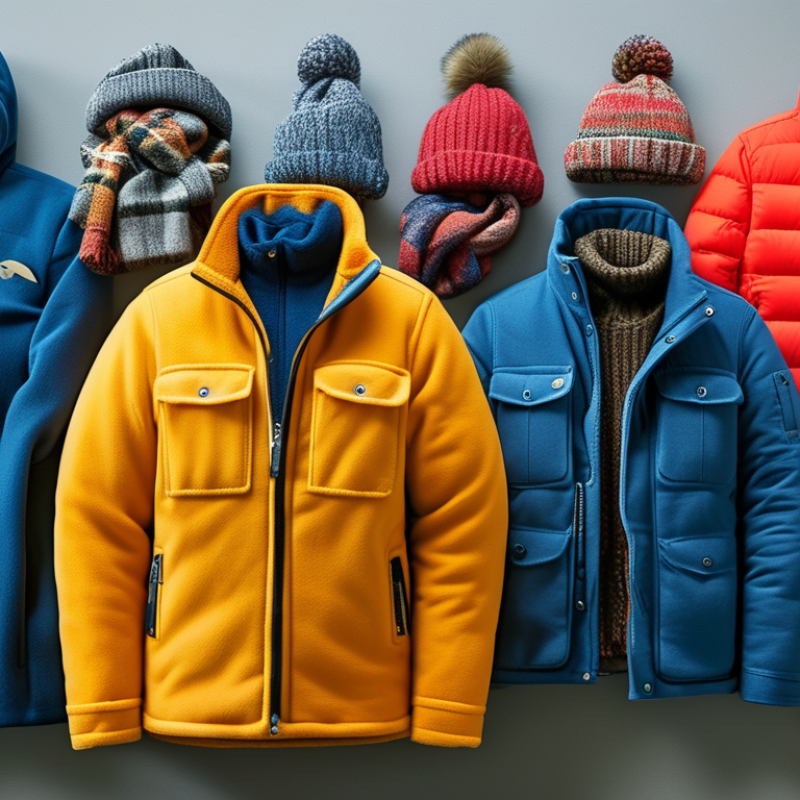
What Are China Top Winter Items to Source?

Map the Market: China’s Textile and Apparel Exports Hit $293.6B in 2023

China’s textile and apparel exports reached US$293.6 billion in 2023, showing the depth of its winter supply market. This scale supports many product categories, from thermal underwear and fleece layers to padded jackets, wool-blend socks, scarves, gloves, and indoor blankets. Factories often provide flexible materials, packaging options, and production volumes for different retail channels. Still, export value does not guarantee suitable quality or stable delivery.

In sourcing work, I would inspect fabric weight, seam strength, insulation thickness, and colorfastness before discussing price. A winter coat may look warm, yet feel thin after washing. That mistake is common. Ask suppliers for fiber composition, washing results, size measurements, and recent production references. Check whether the factory’s equipment matches the product. A supplier making light shirts may not handle insulated outerwear well. Small details matter, especially zipper performance and stitching around cuffs.

Tips: Begin with three to five suppliers and request identical specifications. Compare samples under the same conditions, including one wash cycle. Confirm minimum order quantities, lead times, carton dimensions, and inspection procedures in writing. Leave room for revisions. The first sample is rarely perfect. Temperature, climate, and customer habits also differ by market, so winter products should not be selected from photos alone.

Prioritize Down Jackets and Thermals Using China’s 2023 Export Baseline

What Are China’s Top Winter Items to Source?

Prioritize Down Jackets and Thermals Using China’s 2023 Export Baseline

China’s 2023 export performance offers a practical sourcing baseline for winter products. China Customs reported approximately US$293.6 billion in textile and apparel exports that year. Apparel exports represented about US$159.1 billion, despite weaker global demand. The data confirms manufacturing depth, but it does not guarantee every factory can produce reliable winter goods.

Down jackets deserve close attention because fill power, down ratio, fabric density, and stitching affect warmth and returns. Trade Map data, based on China Customs records for HS 6201 and 6202, helps buyers compare export values and destination markets. Thermal underwear requires more careful classification. Products may fall under different HS codes, including knitted garments and underwear categories. This can distort simple market comparisons.

Tips: Ask suppliers for 2023 export records, fill-power test reports, down-content certificates, and wash-test results. Request a pre-production sample with measured chest width and sleeve length. Small differences matter. A 700-fill jacket can feel disappointing if construction leaks heat. That mistake is easy to miss in product photos. Buyers should also check fiber composition and labeling rules in each target market. I would not rely on a supplier’s bestseller list alone; export data and independent testing provide stronger evidence.

Assess Winter Boots and Accessories with EN and ASTM Performance Standards

What Are China Top Winter Items to Source?

China’s winter sourcing market covers insulated boots, thermal gloves, wool-blend socks, gaiters, and traction accessories. Grand View Research estimated the global footwear market at about USD 454.5 billion in 2023. This scale creates opportunity, but performance claims need evidence. A warm-looking boot can still fail on wet steps.

For boots, EN ISO 20345 or EN ISO 20347 should match the intended occupational use. Check cold insulation marked CI, water resistance, sole grip, and laboratory test records. ASTM F2413 focuses on protective footwear requirements, while ASTM F3445 evaluates slip resistance. These standards are not interchangeable. Ask suppliers for current reports, test methods, sample sizes, and production dates. A certificate without traceability is weak evidence.

Accessories require separate checks. EN 511 evaluates gloves against convective cold, contact cold, and water penetration. ASTM F2732 helps assess cold-weather clothing temperature ratings, but it does not replace wearer trials. Inspect stitching near thumb seams, zipper guards, reflective panels, and sole bonding. Small failures become obvious after snow, salt, and repeated flexing. We still over-trust laboratory numbers. Field testing remains necessary, especially when sizing, moisture, and movement differ between users. A practical sourcing file should compare three samples, record test conditions, and document every material change.

What Are China Top Winter Items to Source? - Assess Winter Boots and Accessories with EN and ASTM Performance Standards

This chart compares minimum toe-cap impact and compression requirements used in EN ISO 20345:2021 and ASTM F2413-18 safety footwear specifications. These values are useful checkpoints when sourcing winter boots, although the test methods and certification systems are not directly interchangeable.

Sourcing note: EN ISO 20345:2021 specifies 200 J impact resistance and 15 kN compression resistance for standard protective toe caps. ASTM F2413-18 specifies 75 ft·lbf impact resistance, approximately 101.7 J, and 2,500 lbf compression resistance, approximately 11.1 kN. Always request current third-party test reports for the exact boot model and production batch.

Source Electric Blankets and Heaters Under IEC 60335 Safety Requirements

China’s winter sourcing market offers many electric blankets and portable heaters, but price should not lead the decision. Safety must come first. IEC 60335 requirements provide a practical framework for evaluating household electrical appliances. For blankets, review the applicable IEC 60335-2-17 requirements. For room heaters, check IEC 60335-2-30 and the relevant national deviations.

Before purchase, confirm the applicable IEC 60335 edition and testing scope. Request test reports from an independent, competent laboratory. Check insulation, leakage current, temperature control, wiring protection, and abnormal-operation results. A reliable electric blanket should show stable heating across its surface. Look for secure connectors, strain relief, and clear washing instructions. Moisture is a serious concern. Even small design gaps can create dangerous hot spots.

For heaters, inspect tip-over protection, overheat cut-off, flame-resistant materials, plug design, and enclosure strength. Test samples under blocked airflow and repeated switching. Do not rely only on factory documents. Visit the production site when possible, and compare mass-production units with approved samples. Packaging should protect controls and cords from crushing during shipment.

A common mistake is treating compliance paperwork as proof of every shipment’s quality. It is not. Specifications can change quietly. I would record component details, temperature limits, markings, manuals, and carton labels before placing an order. Ask suppliers to notify you about substitutions. The process may feel slow. That is preferable to discovering a safety weakness beside a customer’s bed or heater.

Rank Suppliers by MOQ, Lead Time, AQL 2.5, and Landed Cost

What Are China’s Top Winter Items to Source?

Winter sourcing should begin with demand, not catalog size. Thermal base layers, fleece blankets, knitted accessories, and insulated home textiles remain practical seasonal categories. The National Retail Federation forecast U.S. holiday sales of $979.5–$989 billion in 2024, up 2.5%–3.5% year over year. This supports seasonal demand, but not every item deserves a large opening order.

Rank Chinese suppliers with a weighted score: MOQ 25%, lead time 25%, AQL 2.5 performance 25%, and landed cost 25%. A supplier offering 300-piece MOQ, 28-day production, and 2.5% acceptable defects may outrank a cheaper factory requiring 3,000 pieces. Request three production records, not only a polished sample. Check stitching, fabric weight, zipper strength, carton compression, and color consistency. AQL 2.5 is a sampling benchmark, not a guarantee of zero defects. That distinction matters.

Landed cost should include unit price, packaging, inspection, inland transport, duty, insurance, and ocean or air freight. Freightos reported substantial container-rate volatility during 2024, showing why quotations can age quickly. Ask suppliers to quote both ordinary and peak-season lead times. For example, a blanket supplier with a $4.80 unit price may cost more after slow production and premium freight. I would rank reliability above the lowest quotation, although this can reduce short-term margin. The scoring model is useful, but imperfect; weather-driven demand, port delays, and forecast errors still resist neat spreadsheets.

Article Source:

Share by: